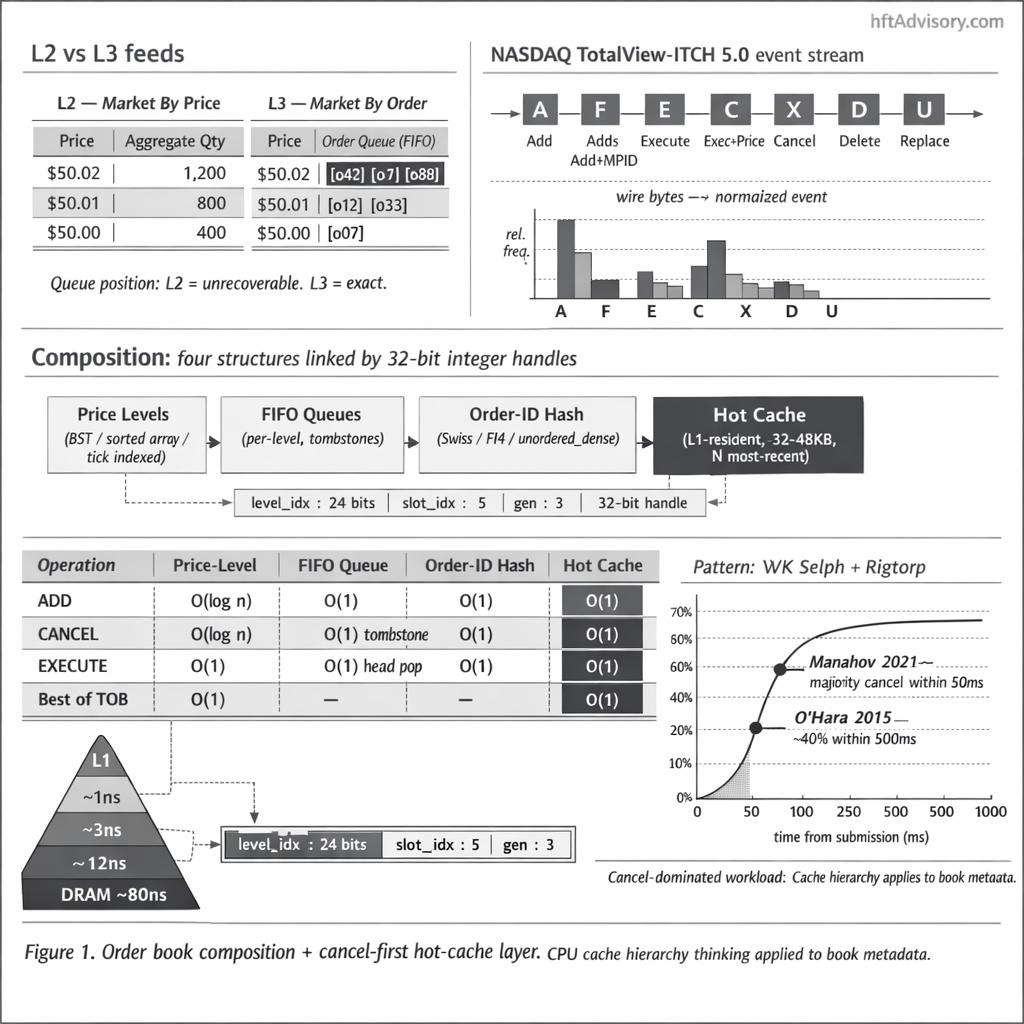
Cancel-First Order Book Design: From ITCH 5.0 to L1D Hot Caches
Why cancel-dominated workloads break most order books, and how L1D hot-cache design and per-order MBO data fix queue-position blindness across FIFO venues.
High Frequency Trading | Low Latency systems | Market Making Models | C/C++
Why cancel-dominated workloads break most order books, and how L1D hot-cache design and per-order MBO data fix queue-position blindness across FIFO venues.
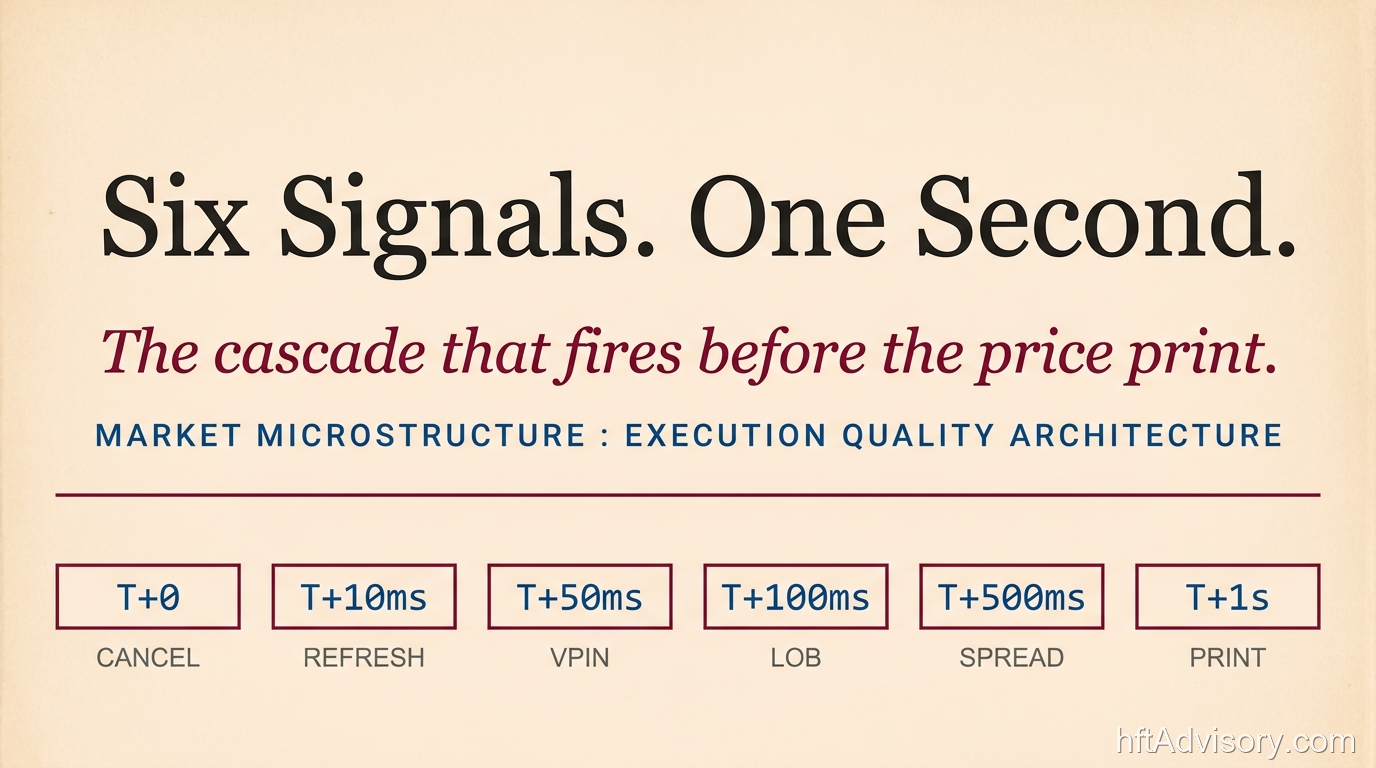
The Gap Between When the Move Begins and When It Shows Up on Your Report Every execution quality report I…
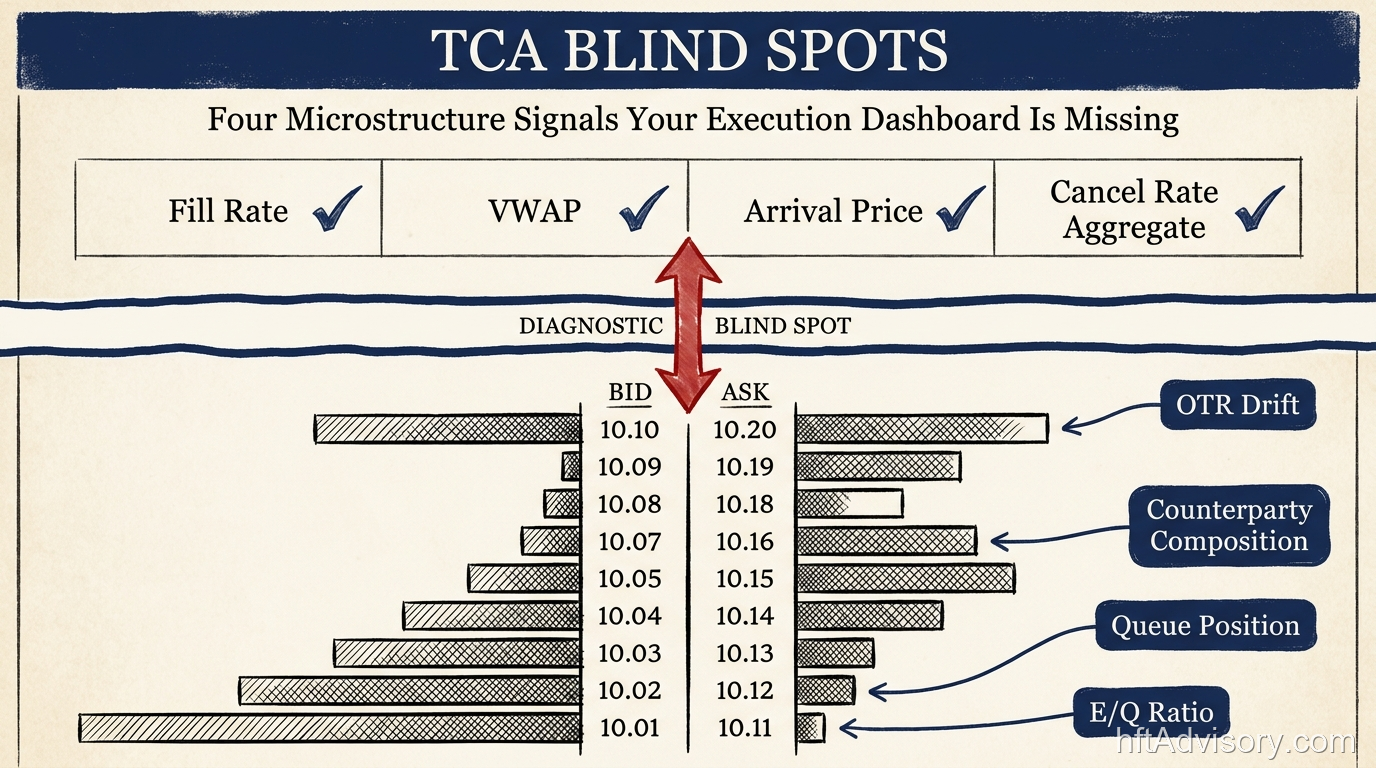
Four microstructure signals most TCA dashboards miss: OTR drift, counterparty composition, queue position economics, and effective vs. quoted spread.
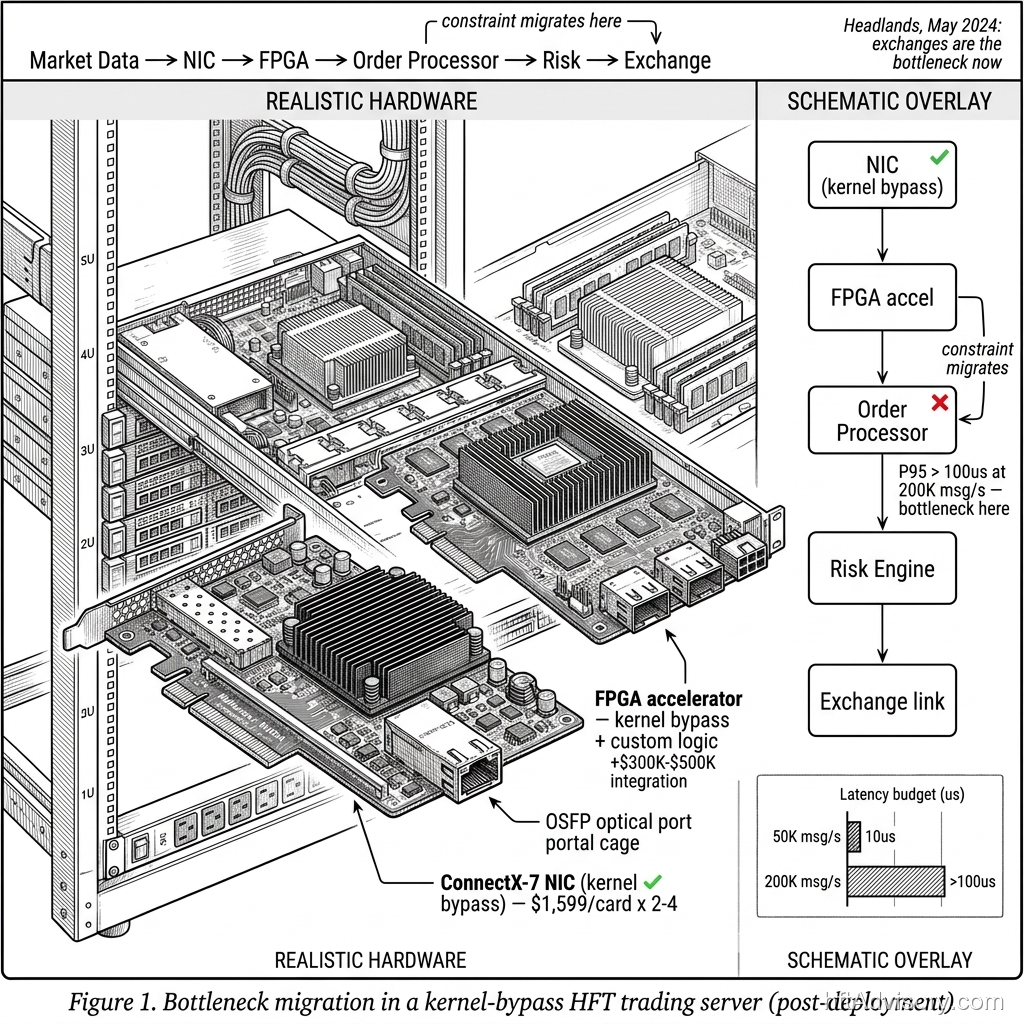
Based on engagements I have priced, a full kernel-bypass stack with FPGA integration has run $1M to $2M all-in —…
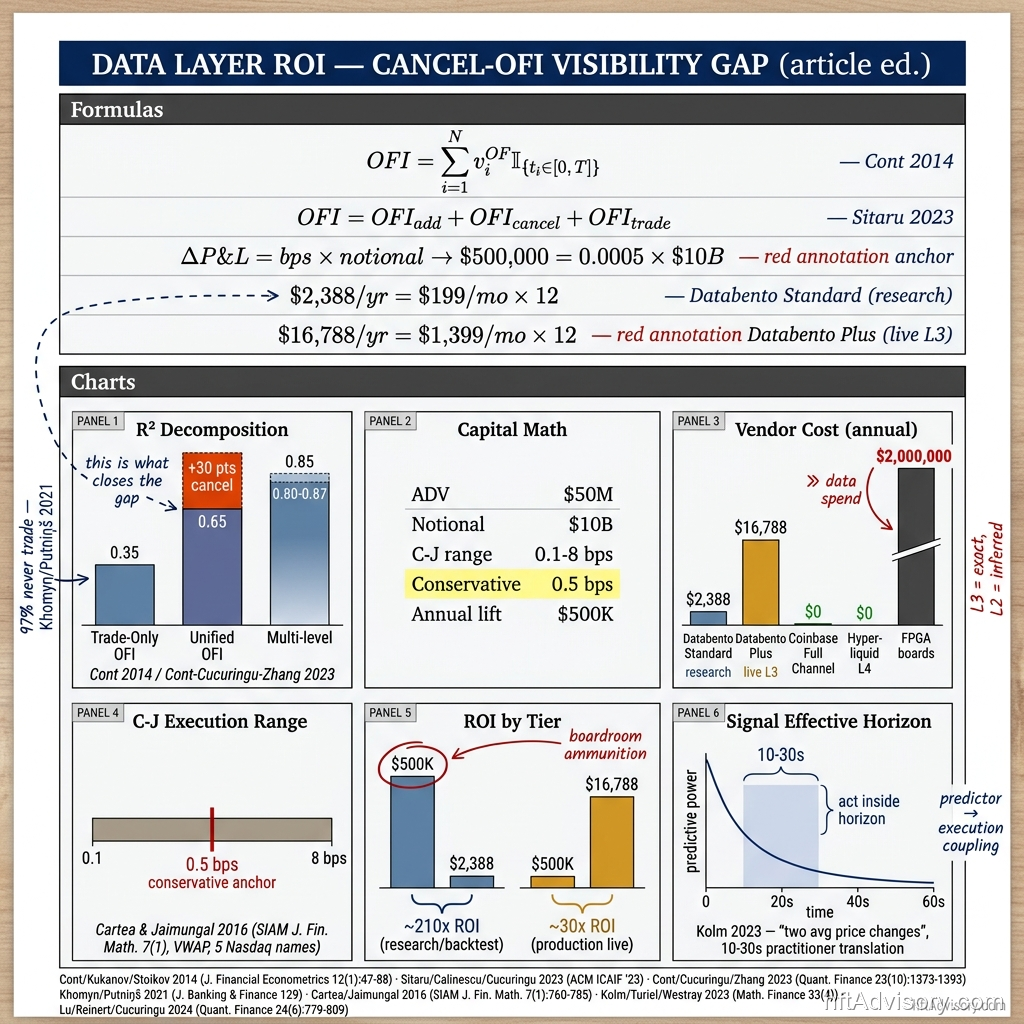
If I were rebuilding the signal stack today, the first dollar would go to the data line. $2,388 a year…
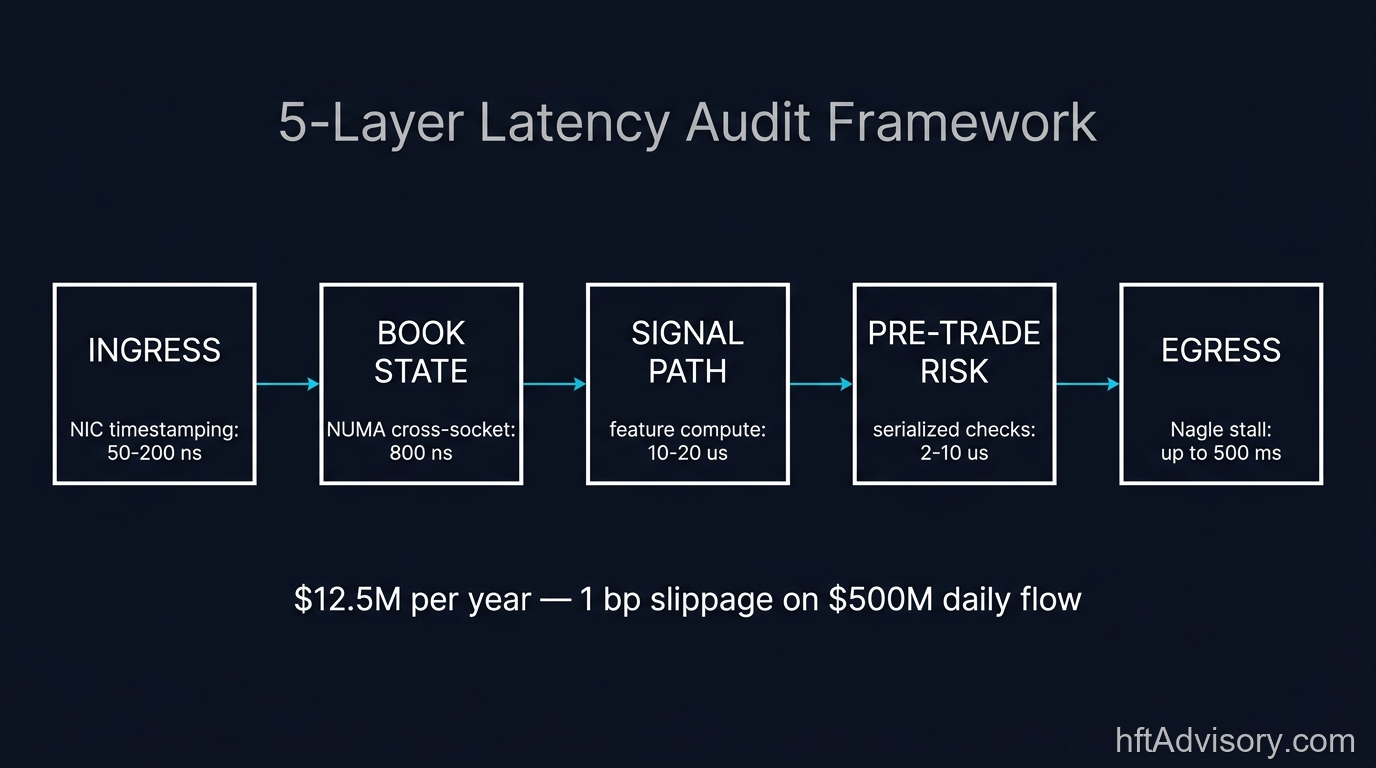
A 5-layer latency audit for HFT and electronic trading stacks. Diagnose where execution budget leaks before it costs $12.5M/year.
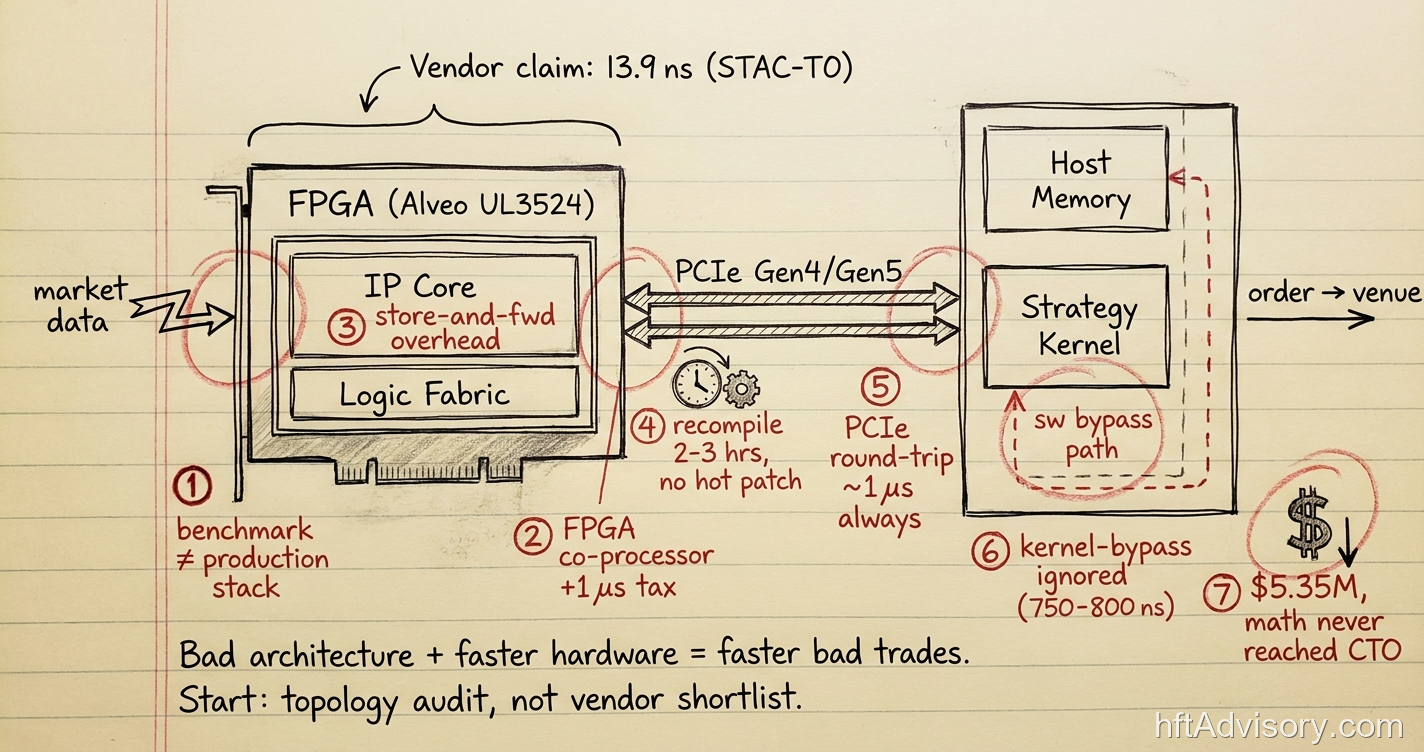
$5.35M venue build. $4.59M/yr maintenance. The tick-to-trade profile barely moved. Here are the 7 FPGA deployment failures I keep seeing on the same desks.
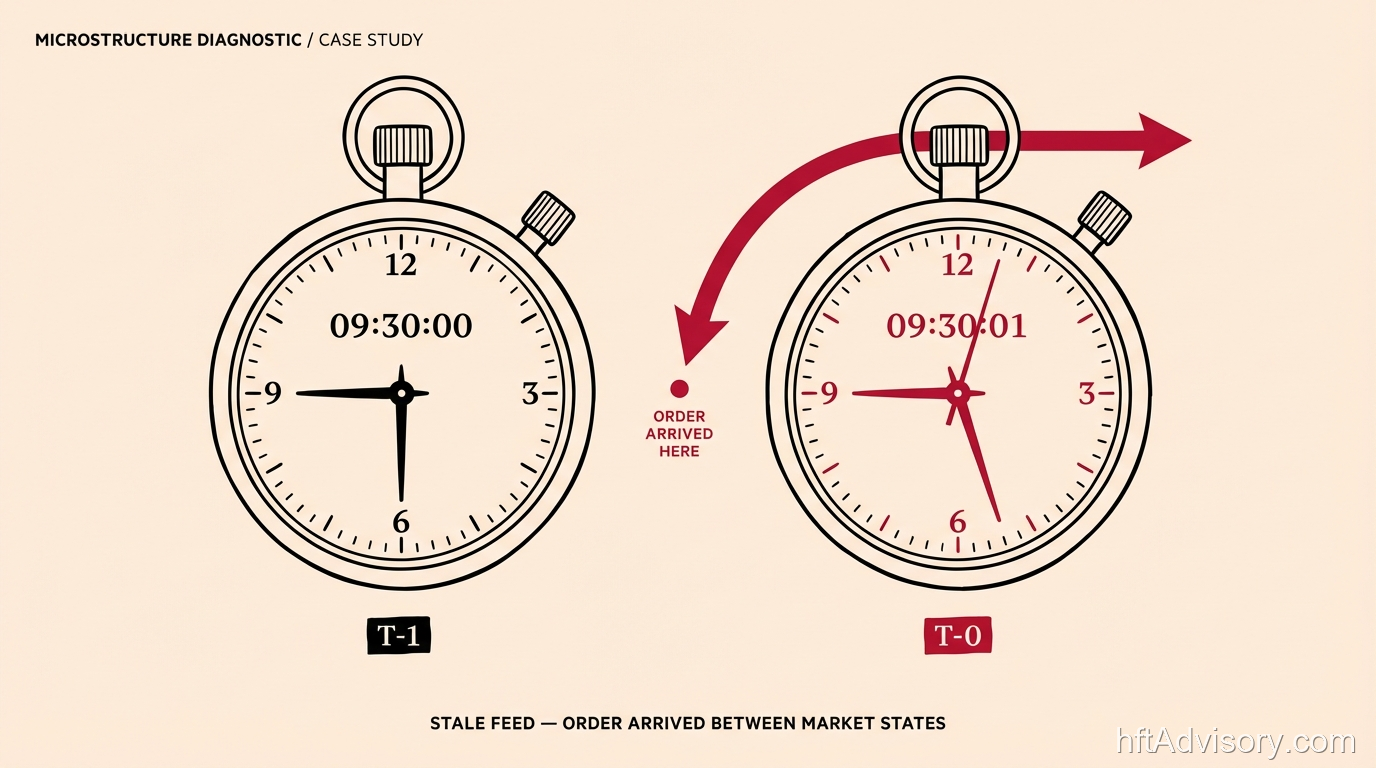
A 50.8% reject ratio and $182K shortfall traced to a stale pricing feed. Two real log-file case studies in microstructure diagnostics, VPIN toxicity, and fill rate optimization.
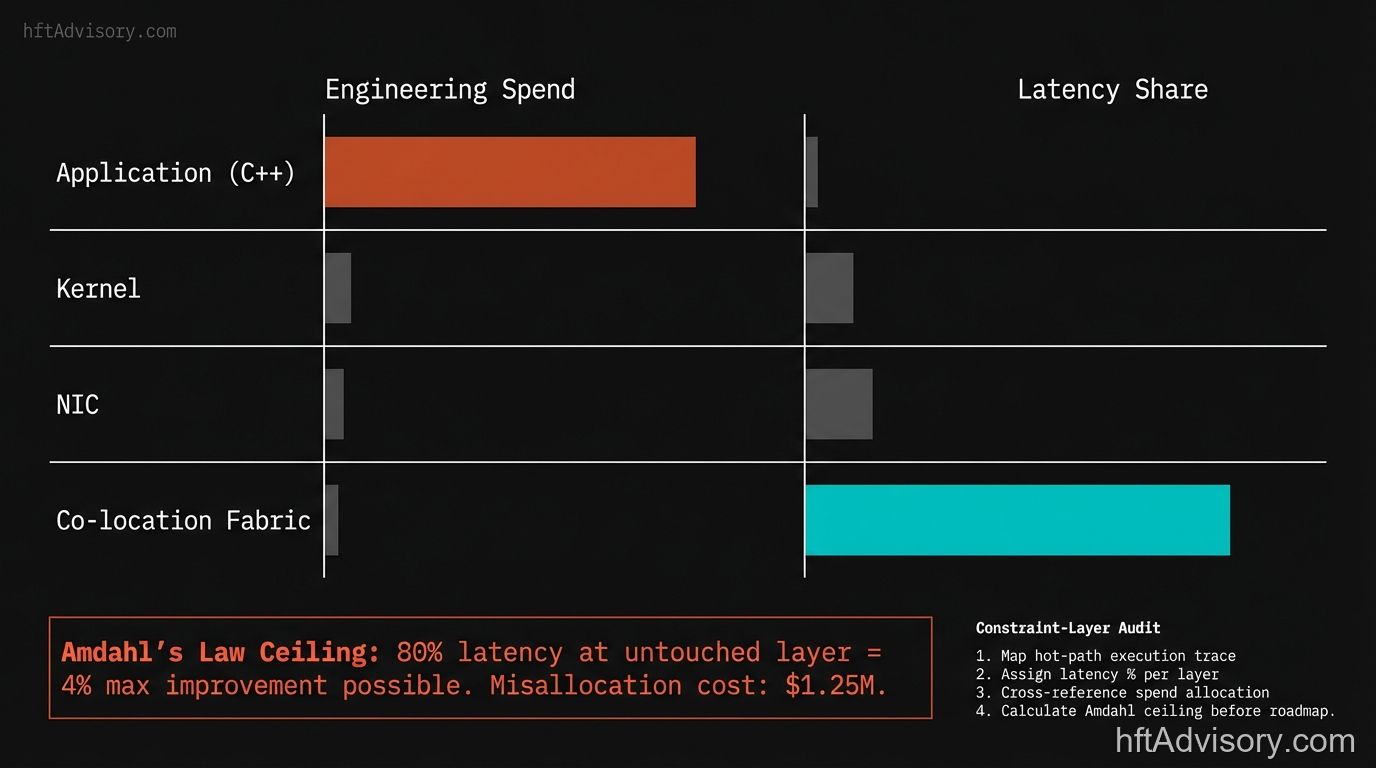
Most HFT latency programs fail before the first sprint ends. Learn the 4-step constraint-layer audit that prevents $1M+ in misallocated engineering spend.
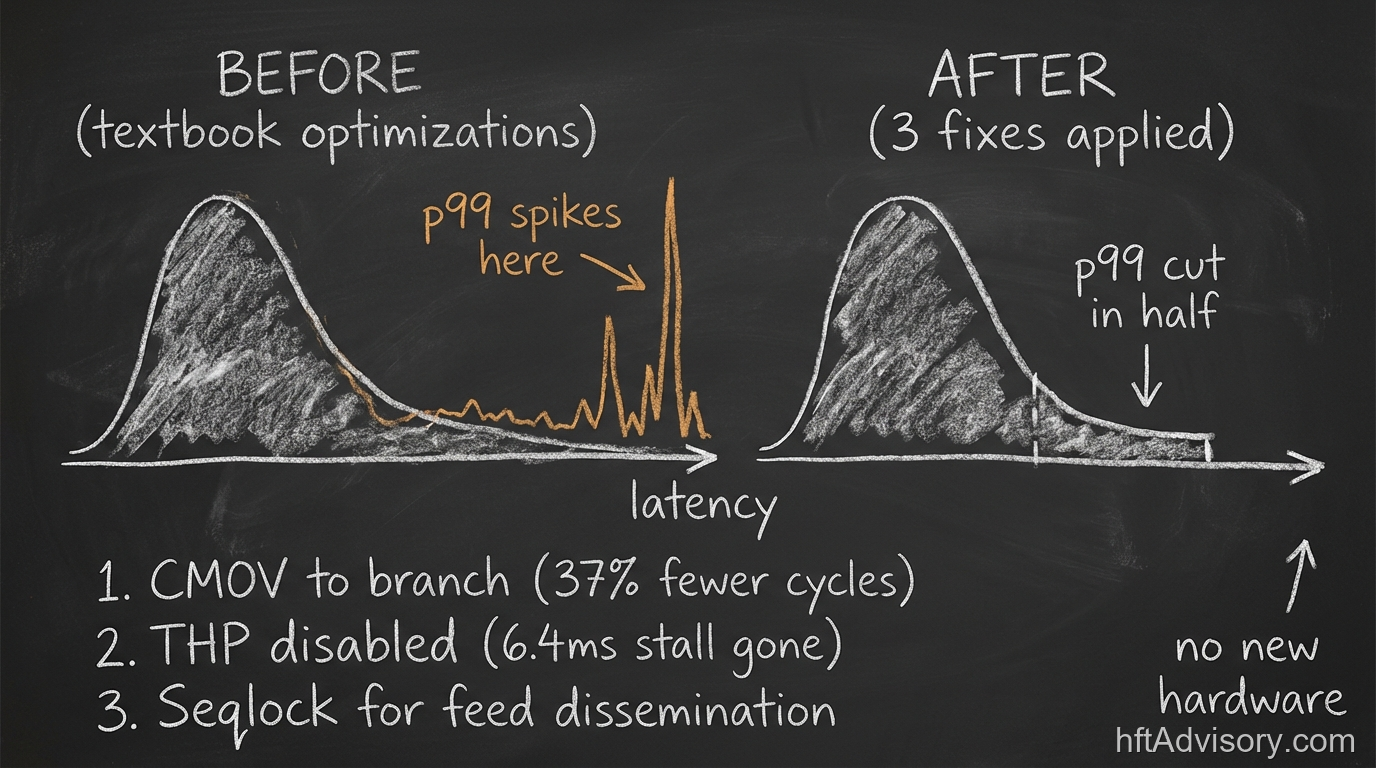
A $500M daily desk applied every C++ optimization in the textbook. Their p99 latency got 23% worse. Here is the three-root-cause post-mortem.
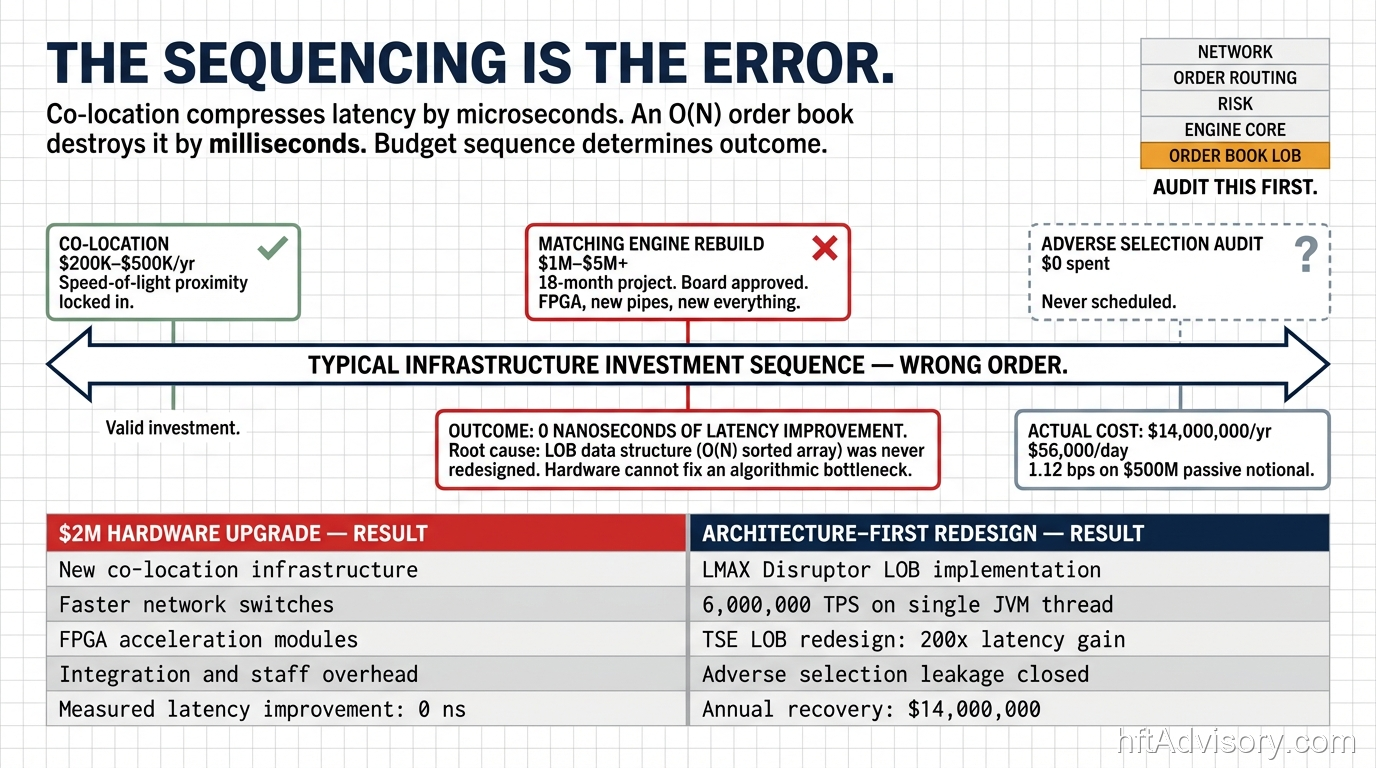
Three budget lines, one sequencing error: co-location spend, adverse selection leakage, and matching engine rebuilds that never profile the LOB layer.
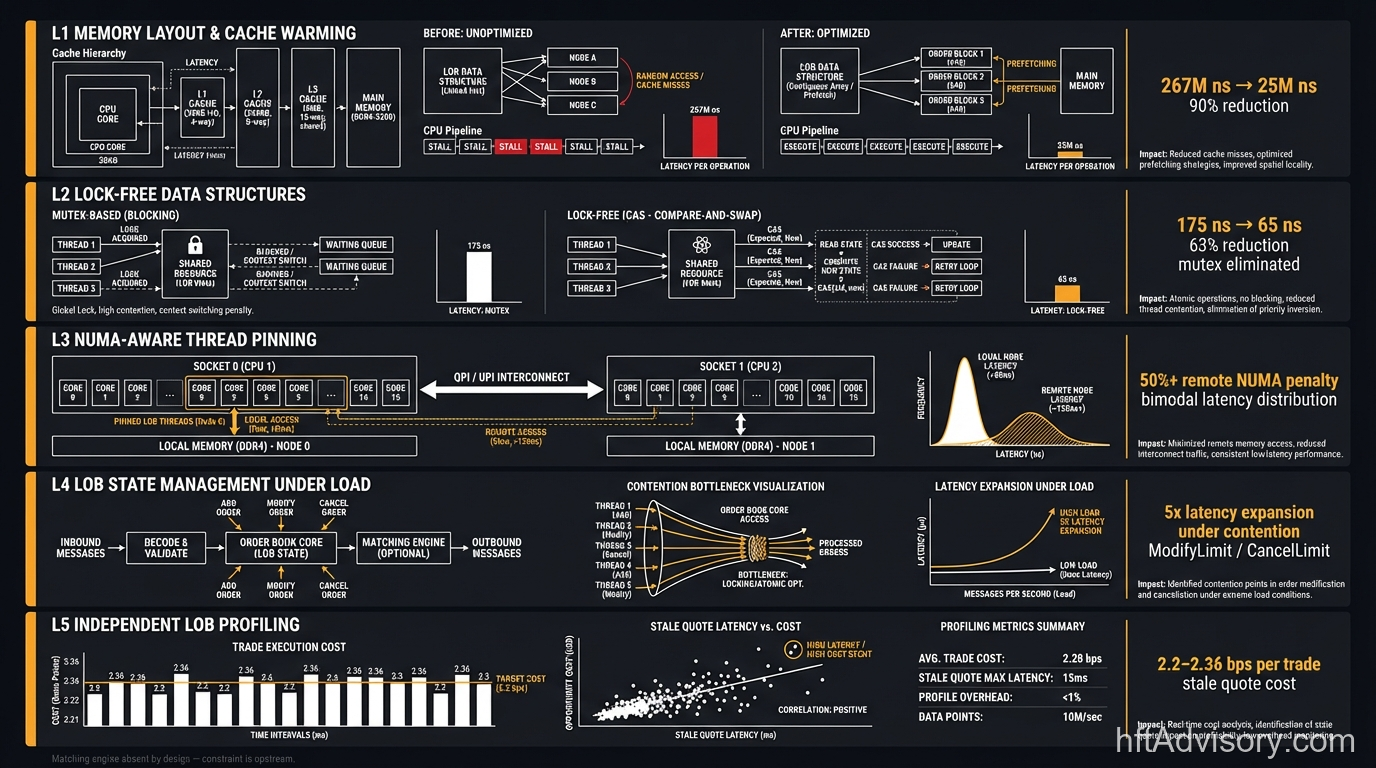
Two matching engine rebuilds, eight months, board approval twice — and the latency profile barely moved. The bottleneck was never the matching engine. This article breaks down the five-layer LOB diagnostic framework that located the actual constraint.