The Empty-BBO Problem: Designing an FX Circuit Breaker for Real Risk Management
Table of Contents The Empty-BBO Problem: Why One Dealer’s Book Isn’t a Market Inside the Mechanism: Pricing Gateway, Contribution Gateway,…
High Frequency Trading | Low Latency systems | Market Making Models | C/C++
Table of Contents The Empty-BBO Problem: Why One Dealer’s Book Isn’t a Market Inside the Mechanism: Pricing Gateway, Contribution Gateway,…
Every order sent to a market moves through the same three-part sequence: a decision made before it is sent, a…
Table of Contents The Plumbing Already Exists What L2 Hides: The Queue-Position Problem What Order-Level Data Has Already Caught in…
The Gap Between When the Move Begins and When It Shows Up on Your Report Every execution quality report I…
Table of Contents What the Dashboard Records vs. What the Market Sees Cancel Ratio Drift and Order-To-Trade Ratio as Adverse-Selection…
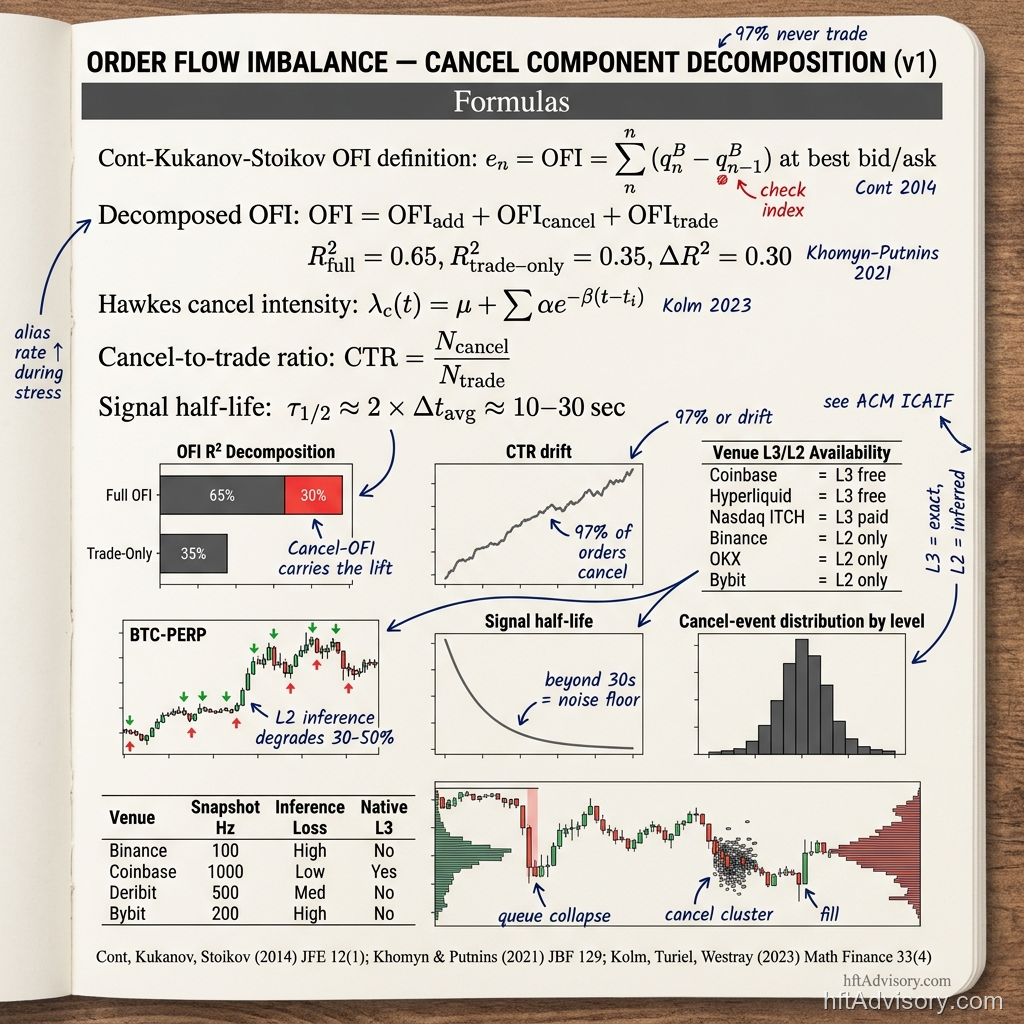
Table of Contents The 30-Point Gap That Lives in Your Cancel Stream Why 97% of Your Order Book Never Prints…
Table of Contents The Counterintuitive Inversion: When a 50.8% Reject Rate Is Your Best Defense The Single-Metric Trap: Why Execution…
Table of Contents What VPIN Actually Measures — And What the Academic Debate Gets Wrong for Practitioners The LOB Imbalance…
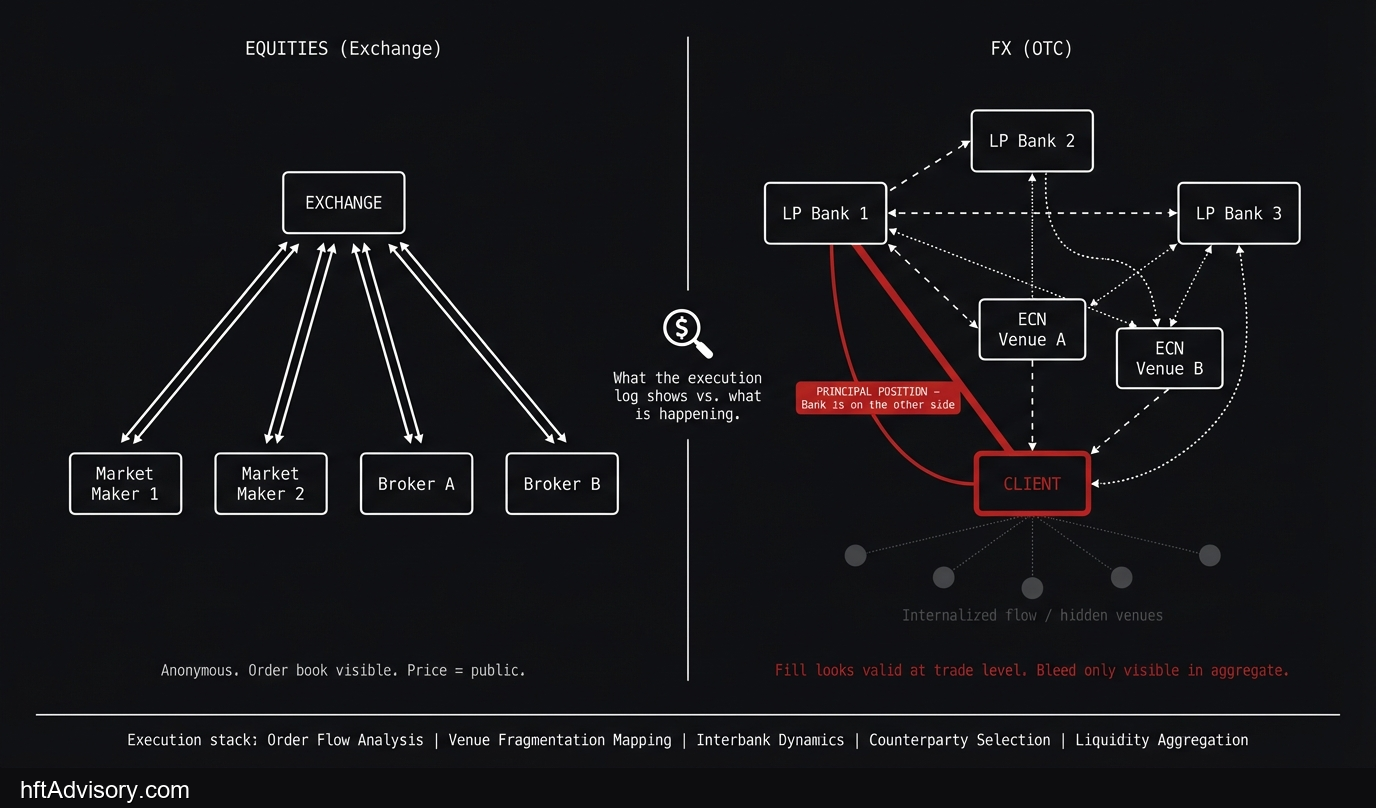
Table of Contents Why FX Liquidity Works Nothing Like Equities What “Last Look” Actually Means for Your Execution Stack The…
Table of Contents The 5-Microsecond Window That Separates Alpha from Adverse Selection Speed Is Fragmented: Why Venue Architecture Dictates Outcome…
Table of Contents The Carnegie Mellon Dropout Who Democratized Markets Why a FoxPro Database Changed Trading Forever The Maker-Taker Model:…
Background: Stock Trading in the 1990s In the mid-1990s, U.S. stock trading was dominated by human intermediaries and fragmented systems.…
Introduction Traders are always on the lookout for the slightest edge that can turn a profit. One crucial aspect that…
Professor Chien-Feng Huang, at the National University of Kaohsiung in Taiwan delves into high-frequency trading across Artificial Intelligence In the…
Algorithmic trading, often referred to as algo trading, involves using computer programs to follow a defined set of instructions for…
If you have been following, you already know that I have always been focused on low-latency trading systems. Assuming that…
In this case study, we are excited to share an insider’s perspective and look under the hood of how a…
Ever wondered how HFT strategies work? Today, we’ll explore the 0+ HFT strategy – a strategy that has been practiced…
(By Jonathan Simon). Original article published here. It is easy to distance yourself from a large collection of patterns or…
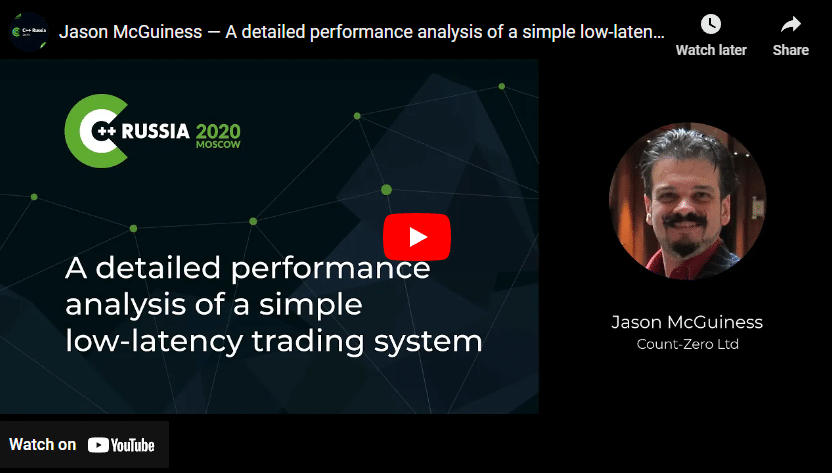
The video titled “A detailed performance analysis of a simple low-latency trading system” presents an overview of a simple low-latency…
A Guide to Machine Learning in Trading This book has been created by ChatGPT-4 and promoted and published by Gautier…
[vc_row full_width=”stretch_row”][vc_column][vc_column_text] Making a trading system “fast” cannot be an afterthought. While low latency programming is sometimes seen under the…
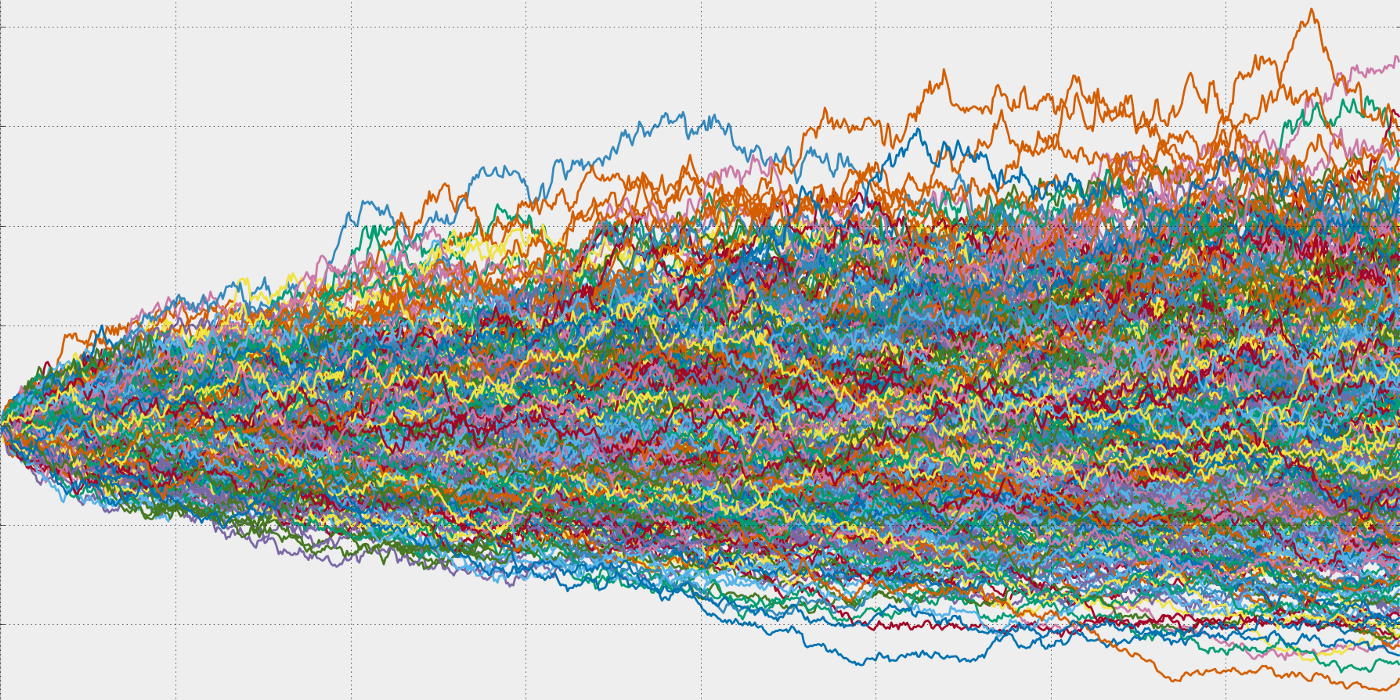
In financial markets, quantitative traders use the most common Monte Carlo Simulation method to reshuffle the order of their historical trades to help them better understand how a trading system could have happened.
Curated content from here. By Stephan M Kessler, global head of quantitative investment strategies (QIS) research at Morgan Stanley, and Vishwanath…
AI is increasingly being adopted by hedge funds to generate investment ideas, help with portfolio and investment decisions, for signal generation, to manage risk, and in some cases execute trades. As interest from managers grows, and as the technologies underpinning these strategies continue to develop, what might AI mean for how hedge funds invest?
Original post by Aiden Pestell Hi tech savvies. My name is Aiden and I have spent the last 4 years…
https://miro.medium.com/max/1400/0*2arApVA3c-sEuK3E Photo by Keith Johnston on Unsplash Greetings! In a previous article entitled “Simplified Avellaneda-Stoikov Market Making” we discussed how to use such…
High-frequency trading firms can easily get to 64% accuracy in predicting direction of the next trade, Princeton study finds